The Forest of the Future
Translation of the article by Giovanni Bottero. La Stampa
The Forest of the Future – “From Marketing to the Fields: How I Created the Oasis for Sustainable Rice” – Giovanni Bottero
“I studied Economics in Turin. I spent a year in Belgium, then eight months in New York at the Italian-American Chamber of Commerce, writing a thesis about food. One chapter focused on exporting risotto to the United States. Which, at a certain point, I actually managed to do.”
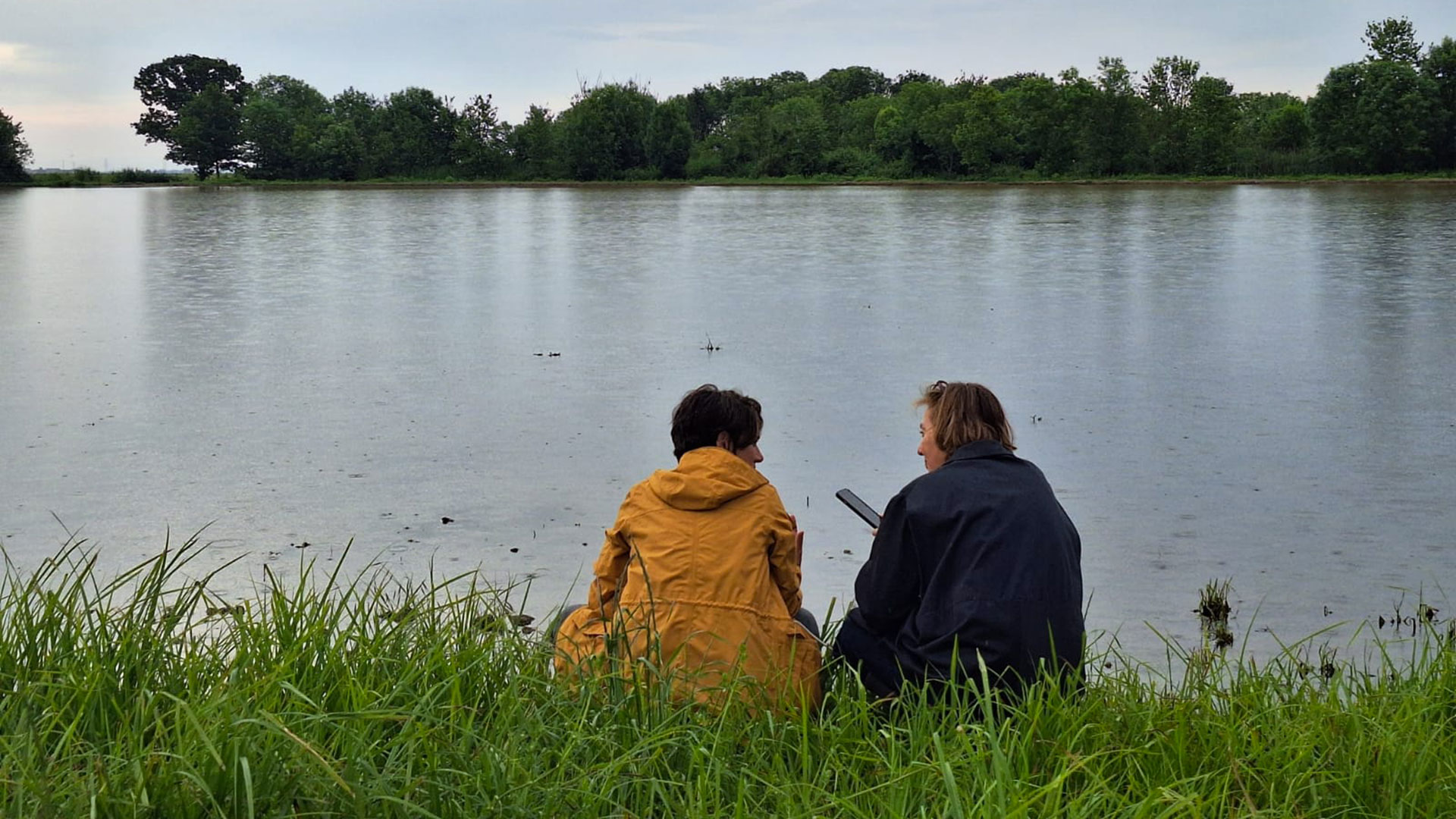
Alice Cerutti smiles across this expanse of water and grass, where herons and dragonflies have returned. Crova, population 351, a twenty-minute drive from Vercelli: a plain that seems motionless, yet is constantly moving, breathing, changing.
“My family owned a rice farm, Cascina Oschiena, bought by my grandfather in the 1950s. It was rented out, managed by others. When I decided to change my life, I came here. And I became the first generation to truly cultivate the land.”
Alice explains that her daily life used to be elsewhere: Turin, Alba. An important internship at Eataly, then a position at Ferrero in marketing. “It was an important and formative experience that helped me understand what I truly wanted to do, both professionally and in my personal life.” The farmhouse in Crova, with its barns and drying facility, stands in the background. “No one wanted to be a farmer.”
But she began spending time there. At first on weekends, Saturdays and Sundays, to catch her breath from the city. Around those fields, something was stirring. “I started attending meetings of the farmers’ association. I don’t want to sound romantic, but the first time I saw the rice growing in the low light, I truly understood the wonder of agriculture: producing food, being guardians of the environment, carrying an enormous responsibility toward the land and biodiversity.”
From that point on, moving into the farmhouse where Benedictine monks had worked in the 1200s was only a matter of time. Alice was 27, with no agricultural experience behind her and many questions ahead. She lived with her husband not far from the Mole Antonelliana in Turin, in Corso Casale — “both of us thoroughly urban.” “But I realized that in life, to follow your dreams, you sometimes have to go against the current.”
She enrolled in evening classes at the agricultural institute in Vercelli, alongside recent high school graduates, and engaged daily with other farmers. Then came the decisive step: moving to the farmhouse, cultivating rice, and seeing the field not just as productive land but as part of an ecosystem. “I realized that ‘preserving’ is no longer enough. We are already late. It’s time to give something back to nature.”
From this vision came a project that, “brick by brick,” transformed the farm into something broader. Alice and her family planted over five thousand trees, converting seven hectares of rice fields into a lowland forest that became a refuge for birds. After four seasons of planning, another milestone followed: restoring 25 hectares of rice paddies to create a large wetland area, returning them to nature as an oasis of ponds and lagoons.
“In the last decade, the black-tailed godwit — a rare migratory bird whose last recorded nesting site in Italy is right here at our farm — had almost disappeared. We chose it as our symbolic species.”
Butterflies returned, along with water clover. “It looks like the Camargue, or Louisiana. The most surprising thing I’ve learned from my work is how quickly nature responds.”
In 2024, something unexpected: Slow Food included her among the Ten Women Saving the Earth. “An incredible honor,” she says. “We created a network and we’re constantly in touch.” It’s a community that shares problems, solutions, and visions.
When asked whether she misses America or Europe, her answer is immediate: “Very little.” Travel continues, and so do the connections. “We have special distributors who believe in our product.” But the center of everything is here, in the plains of Vercelli.
The farm is open — to schools, tourists, and solidarity purchasing groups. “The idea is to cultivate the land and share it with anyone who wants to take part in our project.” There’s a tractor fitted with a wagon for visits, available to everyone. The special guides are her two children, growing up among fields, animals, and ponds.
Even so, she admits nothing can ever be considered final. The countryside is a process, a daily responsibility, a balance to renegotiate each season. In some ways, it is also a battle. Between restored silos and photovoltaic panels, the key word is integrated production. “Soil quality is fundamental. Precisely because this land is so important, we sow cover crops and meadows immediately after harvesting the rice. Then we collaborate with a shepherd who brings his sheep here, leaving organic matter in the soil.”
In economics textbooks, this is called a circular and multifunctional model. It may sound complex. Alice shakes her head: “It isn’t. We need to give back, not overpower. To listen, not to demand.”